BOSA / OPTOS / OCT
BOSA / OPTOS / OCT
We are committed to offering the latest in eye care technology. The Solix OCT (optical coherence tomography), Optos Optomap, and M&S Bruder Ocular Surface Analyzer are key parts of that commitment. Digital images are stored for future reference, enabling us to monitor changes over time.
M&S Bruder Ocular Surface Analyzer (BOSA)
The M&S Bruder Ocular Surface Analyzer (BOSA) is a powerful tool to help diagnose and manage ocular surface diseases. The BOSA helps evaluate the ocular surface, the tear film layers, and meibomian glands, consolidating test results for streamlined assessments.


Optos Optomap
Optomap is an ultra-widefield retinal imaging system. It is the only true, clinically validated, ultra-widefield retinal image that can capture 82% or 200° of the retina in a single capture. With this comprehensive view, we are able to detect, monitor, and treat retinal conditions with greater accuracy.
While the Optomap is excellent for wide-field imaging, detecting specific peripheral retinal issues, like small retinal tears or holes—particularly those located in the far periphery—can be an issue.
I do not use the Optomap to replace dilated retinal exams. Traditional dilation allows me to examine your retina more thoroughly, especially in the peripheral areas where some problems might go undetected with just the Optomap. I prefer to combine both methods for the most comprehensive care for patients with more complex or severe conditions.

OCT
Visionix Solix Retinal Imaging
Solix is an advanced, high-speed OCT platform that helps us evaluate the back of the eye (retina) in a quick and comfortable visit. These scans support early detection, accurate diagnosis, and better long-term monitoring. Many retinal conditions develop silently. OCT imaging helps us spot subtle changes early, often before vision is affected, so you can get the right care at the right time.


Optikam
Optikam's EY-Stick measurement device obtains eyewear measurements that take into account how the frame will be worn by the patient once dispensed.
These personalized “as-worn” measurements allow lens designs to be customized to take into account Vertex Distance, Pantoscopic Tilt and Frame Wrap.
As-worn measurements improve monocular Pupillary Distance measurements as well. The Pupilometer measures the monocular Pupillary Distances anatomically based on the center of the patient's face, whereas OptikamPad will obtain monocular Pupillary Distances using the mid-point of the frame which takes into account the frame fit and possible nose pad adjustments.
1 Picture 10 Measurements
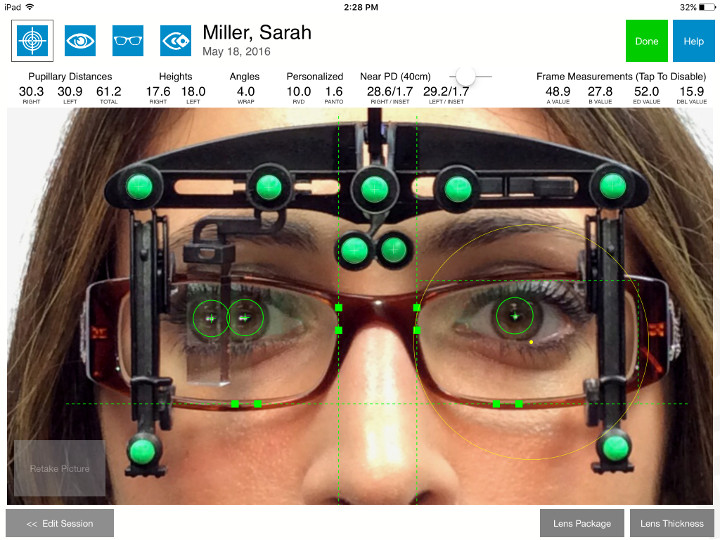 In the time needed for an ECP to obtain two measurements using a pupilometer and a Sharpie, OptikamPad provides the ten measurements needed for Position of Wear:
Monocular Pupillary Distance (PD)
Multifocal Seg Heights
Pantoscopic Tilt (Panto)
Rear Vertex Distance (RVD)
Wrap (Face Form Tilt)
Near Pupillary Distance
A, B, ED/MBS and DBL values
These measurements, when accounted for in the fabrication of the patient's lenses, offer the best visual experience.
Educational
Video Library
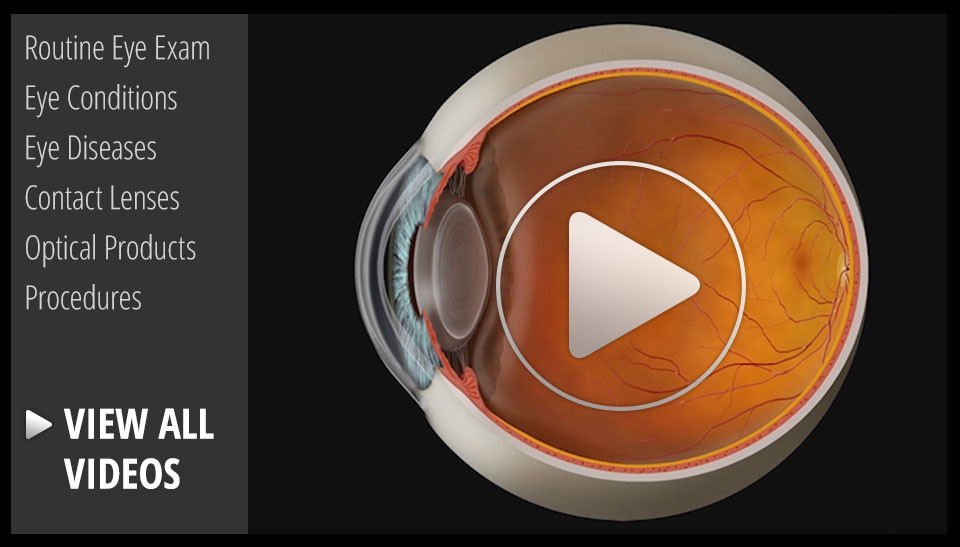
Our comprehensive video library encompasses an extensive array of topics related to eye health, including detailed explanations of various vision conditions, thorough overviews of optical procedures, and informative guides on routine eye examinations.